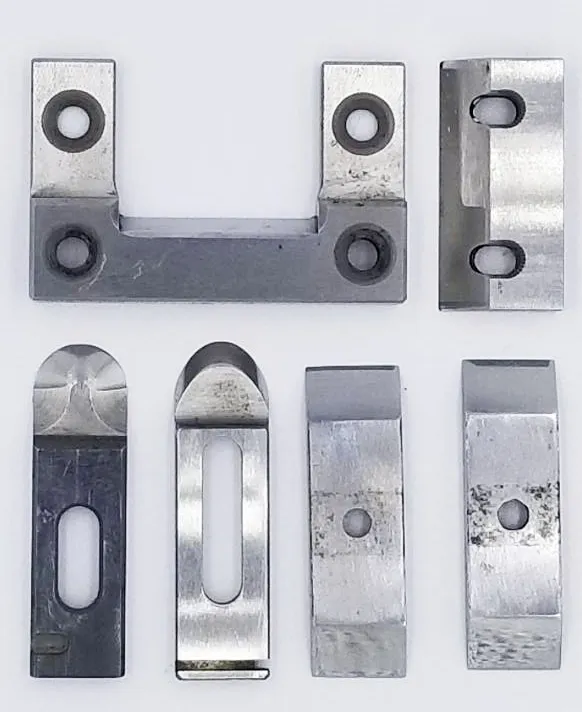
While the blades used in reed-making tools such as gougers and guillotines are typically manufactured from steels that are considerably harder than those found in most reed knives, they are still subject to wear over time. Fortunately, many of these blades can be restored and maintained long before replacement becomes necessary. For sharpening and edge maintenance, we recommend Jende Diamond Films, which are capable of abrading virtually any steel and are available in a wide range of grits, from 80 micron (approximately 320 grit) all the way down to 0.5 micron (approximately 30,000 grit) for ultra-fine polishing.

When servicing gouger and guillotine blades used by oboe and bassoon reed makers, several important considerations must be taken into account. The first is blade condition. Ideally, the cutting edge should be free from significant chips, cracks, or damage, especially on curved or radiused blades. While damaged blades can sometimes be repaired, the process often requires extensive material removal and carries the risk of altering the blade’s original profile. Even minor changes in geometry can negatively affect the performance of the gouger, making restoration impractical in some cases.
The second requirement is the presence of an adjustment mechanism within the tool. Sharpening removes metal from the blade, and once that material is removed it cannot be replaced. As a result, the ability to adjust blade height or depth after sharpening is essential for maintaining proper cutting performance. Flat gouger blades with built-in adjustment systems can often be sharpened and returned to service many times throughout their lifespan.
Guillotine blades present their own unique challenges. These blades are used to trim the tips of reeds and operate much like a pair of scissors. The reed is inserted through the opening of the guillotine, and the blade cleanly severs the cane with a precise cutting action. For the tool to function properly, the blade and mating surface must fit together accurately with minimal clearance. Any gap between the two components can cause the cane to tear rather than cut cleanly, making proper mating and alignment critical during maintenance and sharpening.
With properly maintained blades, reed-making becomes easier, more precise, and more consistent. Regular inspection, cleaning, and sharpening help extend the life of these specialised tools while ensuring optimal performance during every stage of the reed-making process.
Now it’s time to put those freshly maintained tools to work go practice!
Jende Industries is an international company specializing in sharpening services, sharpening equipment, and precision edge maintenance products. We are the makers of Jende Reed Knives, Jende Nanocloth Strops, Jende Diamond Emulsions, and Jende Leather Knife Rolls. We also manufacture and supply custom-cut sharpening stones and accessories for guided sharpening systems, including the Jende JIGS for Knives, Hapstone, Edge Pro, TSProf, KME, and Wicked Edge platforms.
Whether you are a musician, chef, outdoors enthusiast, collector, or sharpening professional, Jende Industries offers products and expertise designed to help you achieve the best possible edge. Be sure to visit our official YouTube channel to learn more about our sharpening products, services, and techniques through detailed demonstrations and educational videos.
