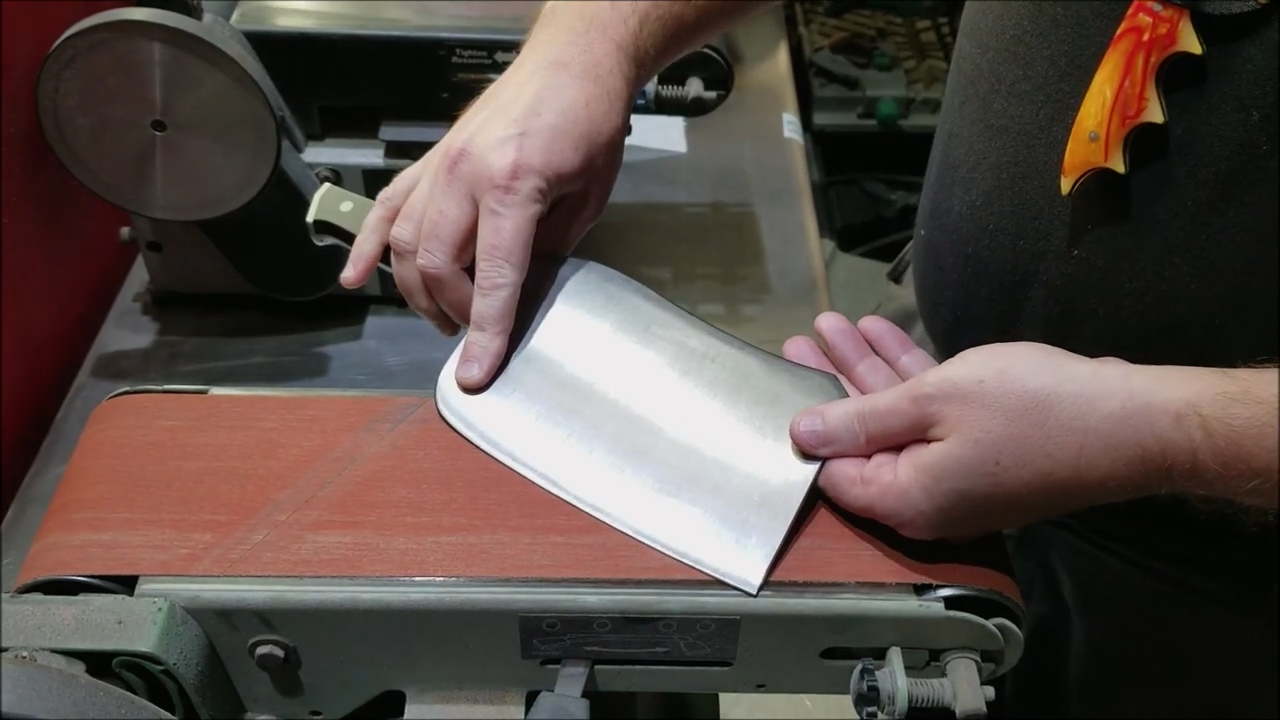
When people think about knife sharpening, water stones usually come to mind. However, belt sanders have been used by professional sharpeners for decades because they can restore an edge quickly while still producing excellent results when used correctly.
A meat cleaver is a perfect example of a knife that benefits from belt sharpening. Its wide blade, thicker edge, and larger surface area make it well suited for this method.
Why Use a Belt Sander?
A belt sander removes steel much faster than sharpening stones, making it a practical choice when working on knives that have become very dull or have small chips along the edge.
Professional sharpening services often rely on belt machines because they allow them to sharpen a large number of knives efficiently while maintaining a consistent bevel.
The key is using the correct belt and applying the right amount of pressure.
Inspect the Blade First
Before turning on the machine, it’s worth taking a few moments to inspect the knife.
Look for:
- Chips or rolled sections of the edge
- Uneven bevels
- Rust or corrosion
- Previous sharpening marks
Knowing the condition of the knife helps determine how much material needs to be removed.
Maintaining a Consistent Angle
Unlike guided sharpening systems, a belt sander relies on the operator to maintain the sharpening angle.
The cleaver is moved smoothly across the belt in one continuous motion, allowing the entire cutting edge to contact the abrasive evenly. Since a meat cleaver has a tall blade, keeping the angle steady from heel to tip is one of the most important parts of the process.
Rather than forcing the blade into the belt, light and controlled pressure produces a cleaner result.
Let the Belt Do the Work
One of the biggest mistakes beginners make is pressing too hard.
Modern abrasive belts cut very efficiently on their own. Excessive pressure creates unnecessary heat, removes more steel than needed, and can shorten the life of the knife.
A steady, controlled pass is usually far more effective than trying to sharpen aggressively.
Watch the Edge
Throughout the sharpening process, the edge should be checked regularly.
Looking closely at the bevel helps confirm that:
- The scratch pattern is even.
- Both sides of the knife are being sharpened equally.
- The edge is reaching the very apex.
- No sections have been missed.
Making small corrections during sharpening is much easier than trying to fix uneven bevels later.
Refining the Edge
Once the primary sharpening is complete, finer abrasive belts can be used to improve the finish.
Each finer grit removes the scratches left by the previous belt while leaving a smoother cutting edge. Depending on how the knife will be used, the final finish can range from a practical working edge to a highly polished bevel.
For most meat cleavers, a durable working edge is often preferred over an ultra-high polish.
Keeping Heat Under Control
Heat is one of the biggest concerns when sharpening with powered equipment.
Experienced sharpeners avoid overheating the blade by:
- Using light pressure.
- Keeping the blade moving.
- Selecting the proper abrasive belt.
- Cooling the knife whenever necessary.
Proper heat management helps preserve the knife’s heat treatment and edge retention.
Why Professionals Like Belt Sharpening
A belt sander offers several advantages:
- Fast steel removal
- Consistent bevels
- Excellent control with practice
- Suitable for large kitchen knives and cleavers
- Efficient for sharpening multiple knives
While it requires more skill than guided sharpening systems, it can produce excellent results in experienced hands.
Final Thoughts
Sharpening a meat cleaver on a belt sander is all about control rather than speed. Although the machine removes steel quickly, taking light passes and maintaining a consistent angle leads to a cleaner, longer-lasting edge.
Whether you’re sharpening a single kitchen knife or handling dozens of knives each day, a properly used belt sander remains one of the fastest and most effective tools for restoring a sharp, reliable cutting edge.
Knife – D-12 Maestro Wu Bombshell Steel Cleaver (heavier)
One thought on “Sharpening a Meat Cleaver on a Belt Sander”